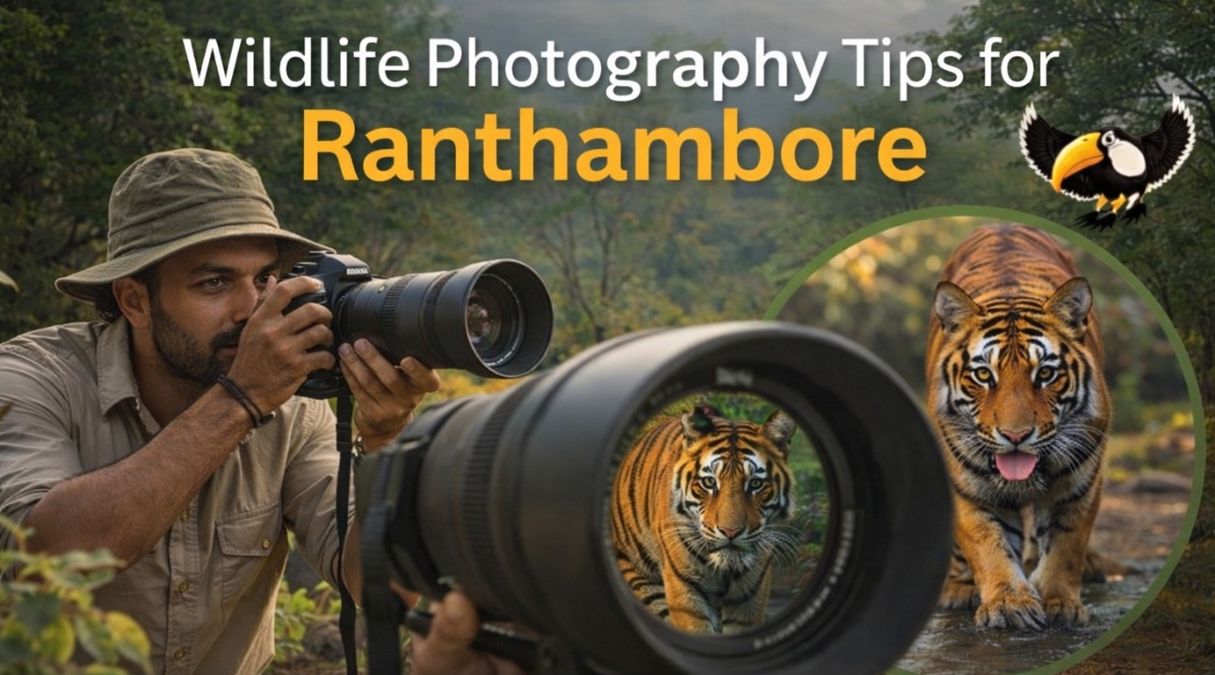
Ranthambore National Park is not just a destination to spot wildlife. It is a place where patience, observation, and timing come together to create powerful photographic moments. For photographers, Ranthambore offers something rare: open landscapes, dramatic light, historic ruins, and frequent wildlife movement.
At Eye of the Tiger, safaris are designed for travelers who want to experience Ranthambore deeply and handle their photography themselves. This guide covers everything you need to know to make the most of your wildlife photography safari in Ranthambore.
Why Ranthambore Is Ideal for Wildlife Photography
Ranthambore’s terrain makes it especially rewarding for photographers. Dry deciduous forests, lakes, rocky paths, and remnants of ancient structures allow for layered compositions that go beyond simple animal portraits.
Unlike dense jungles, Ranthambore often provides extended sightings. Tigers are frequently seen walking on forest tracks, resting near water bodies, or moving through open zones. This gives photographers time to frame, adjust settings, and wait for the right moment.
If you are planning your trip, it helps to start by understanding the overall Ranthambore Safari experience offered by Eye of the Tiger.
Best Time for Wildlife Photography in Ranthambore
Choosing the right season is crucial for wildlife photography.
Summer (March to June)
This is the peak season for tiger sightings. As water sources dry up, animals gather near lakes, increasing visibility. Early morning and late afternoon safaris are especially productive for photography due to directional light and animal movement.
Winter (October to February)
Winters offer comfortable temperatures and softer light. While vegetation can be thicker, the overall conditions are ideal for long photography sessions and bird photography.
Knowing how long a Ranthambore safari lasts helps photographers plan gear usage, battery management, and shooting strategy.
Morning vs Afternoon Safari for Photography
Both safari slots have photographic value.
- Morning safaris provide soft golden light, misty backgrounds, and active birdlife.
- Afternoon safaris offer dramatic shadows, warm tones, and sunset compositions near lakes and fort ruins.
If this is your first visit, it is worth reading these Ranthambore safari tips for first-timers to understand expectations and planning.
Choosing the Right Safari Zone for Photography
Ranthambore is divided into multiple safari zones, each with a different landscape and photographic potential. Some zones are known for lakes and open tracks, while others offer dense forest and rocky terrain.
Instead of focusing only on tiger sightings, photographers should consider background, light direction, and movement patterns. This guide on which zone is best at Ranthambore Tiger Reserve helps photographers choose wisely.
Booking multiple safaris across different zones significantly improves photographic variety.
Essential Camera Gear for Ranthambore
You do not need extreme equipment, but preparation matters.
Camera and Lenses
- DSLR or mirrorless camera with fast autofocus
- Telephoto lens (200mm–600mm) for wildlife
- Mid-range zoom for closer encounters
- Wide-angle lens for landscapes and environmental shots
Support and Accessories
Tripods are impractical in safari vehicles. Bean bags or window mounts work best.
Before your trip, review this checklist on what to pack for a Ranthambore safari so you don’t miss essentials.
Recommended Camera Settings for Wildlife Photography
Start with these settings and adjust based on conditions:
- Shutter speed: 1/1000s or faster
- Aperture: f/5.6 to f/8
- ISO: Increase as needed to maintain shutter speed
- Focus mode: Continuous autofocus (AF-C / AI Servo)
- Drive mode: Continuous burst
Always try to focus on the animal’s eyes. Sharp eyes make images feel alive.
Composition Tips That Work in Ranthambore
Great wildlife photography is about storytelling.
Use the Environment
Include lakes, dry forest tracks, or ruins in your frame. A tiger framed by history creates a stronger visual narrative.
Pay Attention to Light
Early morning and late afternoon light adds depth and texture. Backlighting can produce dramatic rim light around fur and dust.
Be Patient
Some of the best moments happen after long waiting periods. Keep your camera ready even when nothing seems to be happening.
Understanding Animal Behavior Helps You Anticipate Shots
Observation is a photographer’s strongest skill.
- Tigers often follow fixed routes
- Waterholes attract animals in warmer hours
- Alarm calls from deer and birds can indicate predator movement
Learning these patterns increases your chances of being ready at the right moment.
Ethics and Rules for Wildlife Photography
Ranthambore is a protected area. Ethical photography is essential.
- Maintain silence and avoid sudden movements
- Do not attempt to get closer than allowed
- Flash photography is prohibited
- Drones are not allowed inside the park
Always follow instructions from your guide and driver.
Why Booking with Eye of the Tiger Matters for Photographers
- A photography-focused safari requires planning, patience, and experience. Route selection, timing, and understanding animal behavior all influence outcomes.
- Reading about the benefits of booking a safari in Ranthambore with Eye of the Tiger explains why photographers prefer guided, well-planned safaris.
- When ready, you can proceed directly with safari booking.
- For detailed steps, this guide on how to book a Ranthambore safari online is useful.
Post-Safari: Editing Your Wildlife Photos
After the safari, careful editing enhances your images.
- Crop to remove distractions
- Adjust exposure and contrast gently
- Maintain natural colors
- Sharpen selectively
The goal is to enhance the moment without overprocessing.
Final Thoughts
Wildlife photography in Ranthambore is about preparation, patience, and respect for nature. Some safaris deliver iconic tiger moments, while others reward you with birds, landscapes, and quiet stories that still matter.
With the right planning and a thoughtfully organized Ranthambore safari, photographers can return with images that truly reflect the spirit of the wild.
At Eye of the Tiger, the focus remains simple: help you experience Ranthambore authentically and let you do the photography yourself, naturally and responsibly.